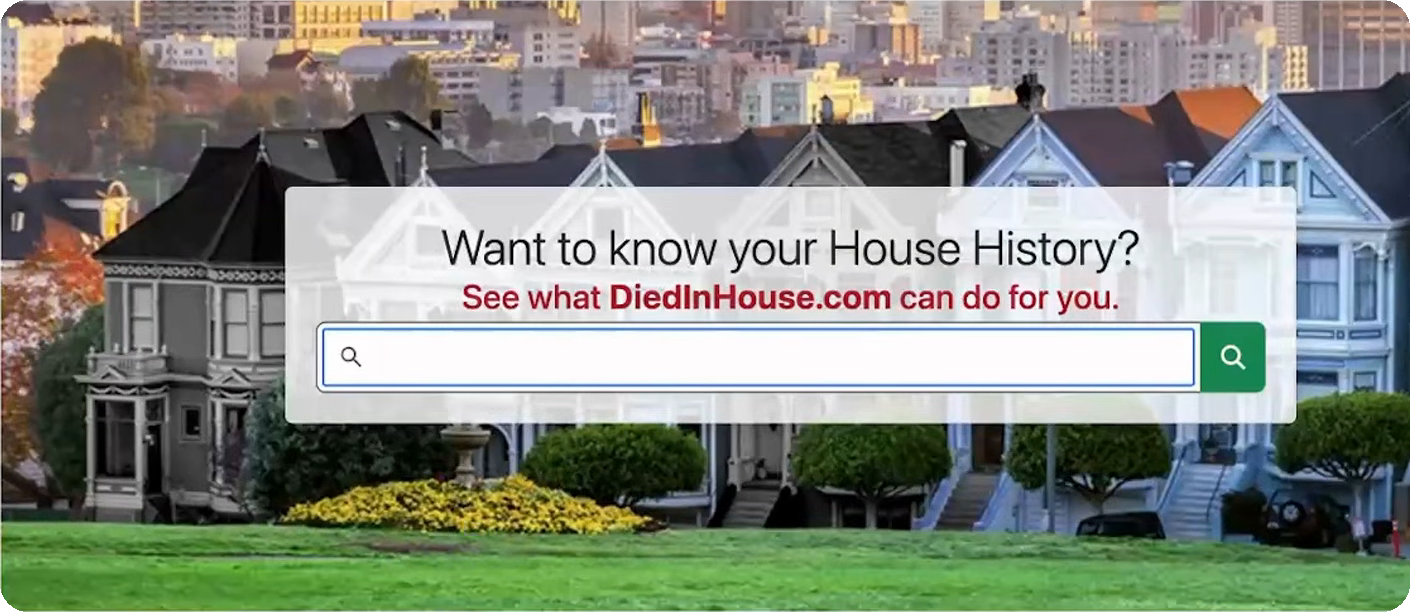
In 2013, a guy named Roy Condrey started a website called diedinhouse.com.
You type in an address, pay $12, and it tells you if someone died there.
That's the whole product. No hint, no free preview. Give me money and I'll tell you.
Here's the thing though. Nothing about this is groundbreaking. He took public data that's spread thin across a bunch of ugly government databases and packaged it so a normal person can get an answer without having 20 tabs open.
He did the part nobody wants to do. And people paid for it.
I've been thinking about this a lot because data as a product keeps showing up around me:
- A PDF that sits on one of my directories has made over $15,000 in its lifetime (a niche within a niche within a niche, so not mass appeal, but still).
- Last week a reader emailed me that one of his directories is about to sell a structured dataset for about $1,000 AUD (Thanks David for the reminder + inspiration!)
- A guy I know built a tap water quality directory and got approached by someone (probably from an insurance company) who wanted the data for certain counties. Sold it for over $500.
So it's happening. The question is how to get intentional about it. Which is why I went through Roy's whole business (the full 17 minute teardown is on YouTube). Here's the short version.
The $12 report
There are a couple of upsells (up to $50 for a deep dive property investigation) but the basic report is 90% of the story.
Who buys this? My first guess was people buying their first home or investing in real estate. But there are other buyers too: haunted house people, true crime people.
And then there's the one I know personally. In Asian culture, a death in a house you're about to buy is a massive deal breaker. I grew up with this. There's a study out of Hong Kong where prices got slashed once a death came out. Part of that Chinese culture came over to America with us, so for certain ethnic groups this isn't a fun fact. It's due diligence.
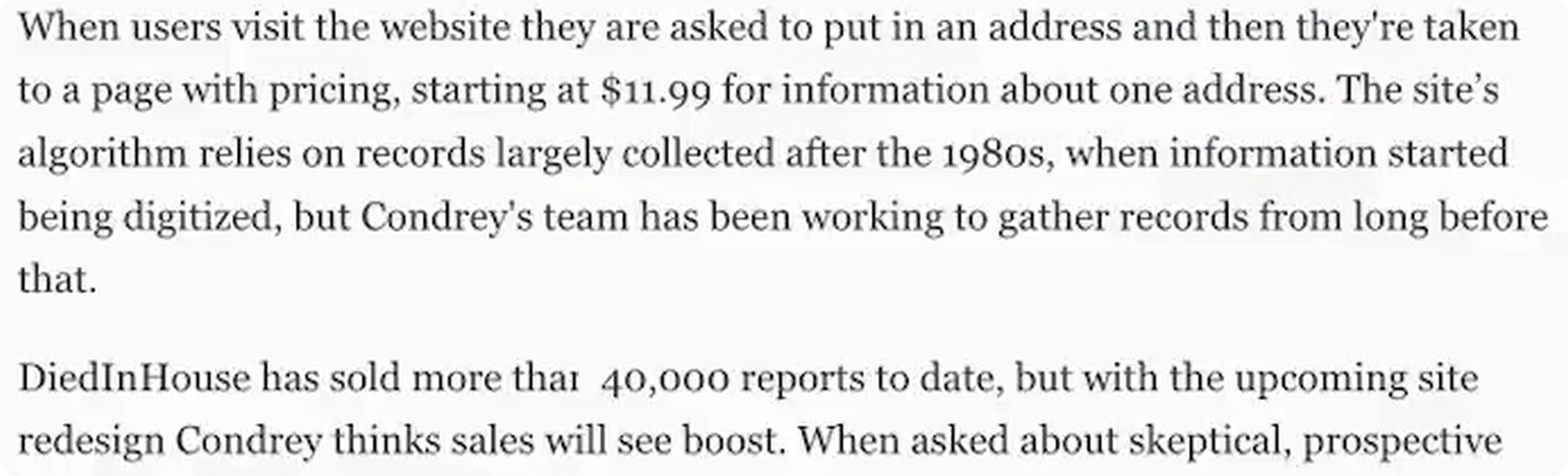
40,000 reports by 2015
He launched in 2013. Two years later, Forbes wrote this:
That's over $480,000 in gross revenue by 2015. He's had 11 years since then with no real competitor, so I'd bet the true number is a lot higher.
And he's still building it. The site says a new basic and premium search tier launched October 1st, 2025.
The FAQ line that explains the whole business
Buried in his FAQ page, question number seven:
"32 states have no disclosure laws related to death on properties." Though a quick Google search says it's actually 47 states.
Something that would absolutely change your purchasing decision, that you'd have no legal way of finding out.
He didn't invent the problem. He found where the information was hiding and put a search box on top of it.
The SEO numbers are honestly not that exciting
If you showed me this cold, I wouldn't build it.
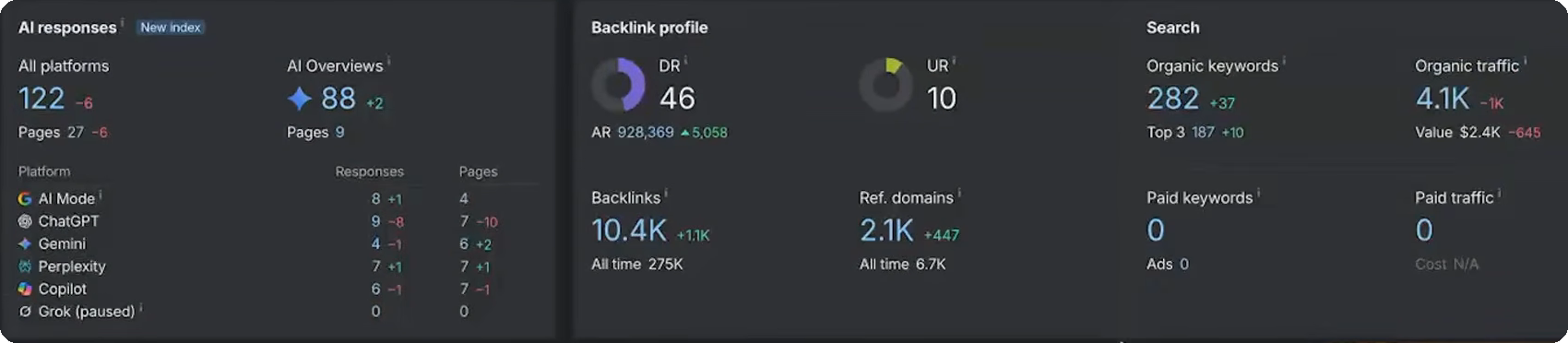
About 4,100 organic visits a month (down from a peak around 38,000 in 2017). 282 keywords, almost all non branded. "Did someone die in my house" gets about 400 searches a month at a keyword difficulty of 2. The whole site is 58 pages and 91% of the traffic lands on the homepage.
The interesting part is what carried him. Scroll to his footer and you'll see Bloomberg, Business Insider, Forbes, ABC News. That digital PR is what propelled the site, not SEO. The keywords are easy and relevant, there just aren't enough of them.
So the lesson isn't "go build a death database." It's that a data product usually needs a distribution strategy beyond ranking on Google. Keep that in mind for the two ideas below.
If I were competing with him
Three gaps I'd go after:
- Accuracy. Reviews on Reddit mention reports that mixed up addresses at opposite ends of the same street. With AI doing the aggregating, you could do a much better job figuring out which John Smith at which address, and show the context.
- The funnel. Most of his top content is blogs about the Conjuring house and famous serial killers. Fun, but not what I'd want as the top of funnel for a real estate product. Somebody could own the "buying a home" angle.
- Paid ads. If this were my site I'd run ads targeted at specific cities where this is a deal breaker (Southern California has a bunch, I grew up in them).
And the product itself isn't complex. Roy actually published a full guide on how to research whether someone died in a house: local news, police reports, obituaries, archived listings, court records, forums. It's basically the scraping blueprint you'd hand to Claude Code or Codex.
Now let's talk opportunities. What types of niches would you reasonably be able to combine directories and public data to sell data as a product?
Idea 1: childcare complaint reports
Parents spend a ton of money on daycare. They want to know their kid is safe.
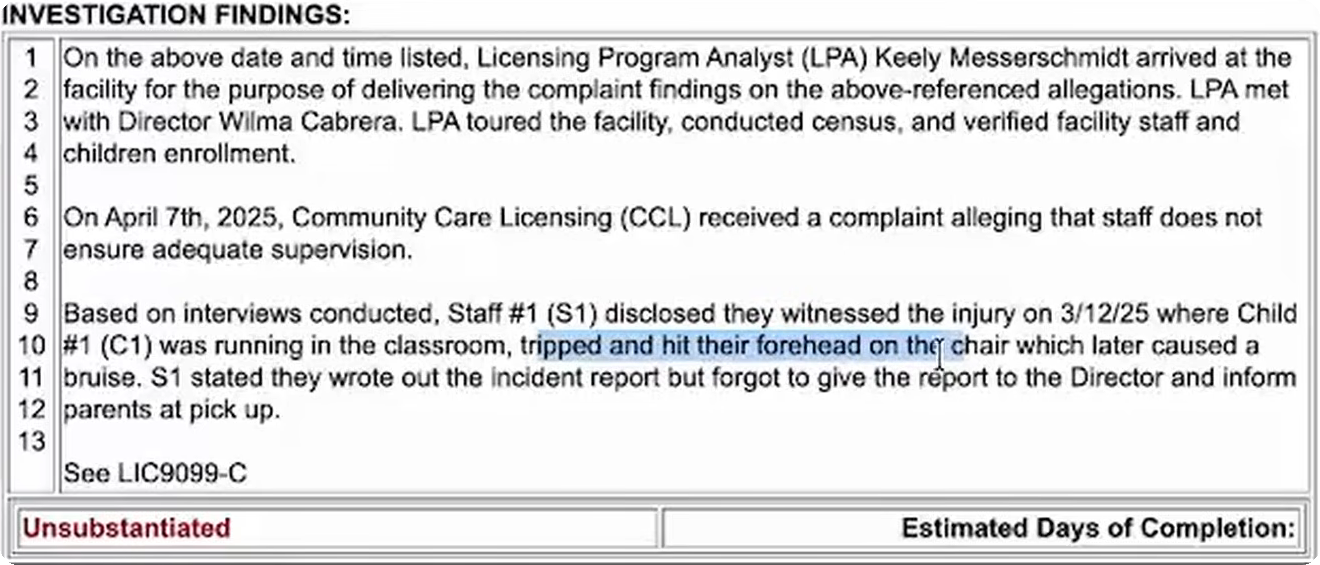
In California, the Department of Social Services publishes every complaint filed against a licensed childcare facility. You can look it up by facility name or address. I pulled a random facility number and this is what one complaint looks like:
That's one of the readable ones. Another complaint at the same facility involved a kid building guns out of Legos and throwing toys. Another one (from 2022) alleged a child shoved wood chips into another kid's underwear, and the parents only found out at bath time.
Different severities, for sure. But if you're a parent, why wouldn't you want all of it, in plain English, before you sign up?
It's all public. It's just hidden behind pages that look like they were built in 2003 and are miserable to navigate.
Here's how I'd distribute it. There are over 760,000 searches a month around daycare in the US. But more importantly, when you launch a statewide or nationwide directory, the first keywords you rank for are branded ones: the actual names of specific daycares. I pulled a few and most don't even have a keyword difficulty score, the competition is that low. Parents search those names looking for reviews and reassurance.
So the setup is:
- Build the directory with an individual listing page for every daycare in the state.
- Let those pages rank (they will, fast, even on a brand new domain).
- Put the offer on every listing: "Want every complaint, citation and inspection for this facility? $15, delivered to your inbox."
That's it. If you build this, please tell me how it goes. I'm highly considering a youtube video where I build this out as a case study.
Idea 2: assisted living violations
Same concept, different stage of life. People putting their parents into assisted living want to know how staff treat residents.
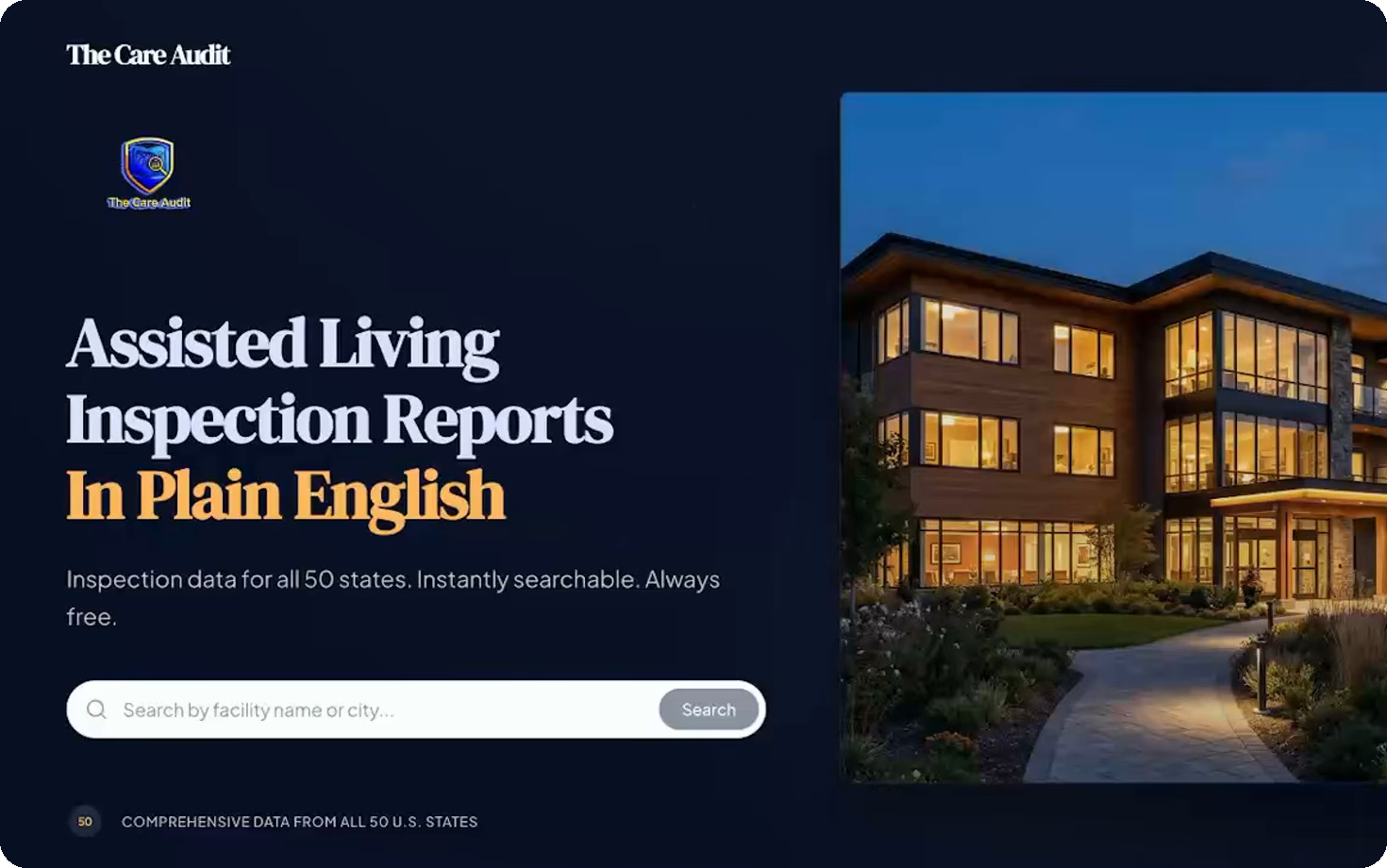
Someone's already on it. thecareaudit.com:
It was created in early June, so about three months old. DR 0.3 (as close to zero backlinks as it gets) and it's already ranking for keywords and picking up organic traffic. In senior living, which is supposed to be a brutal niche for SEO.
The listing pages are the pattern: take the state inspection report, summarize the violations in plain English, give the value up front. The upsell is the deep report for the family that's seriously deciding.
Will this still work in 5 years?
I don't know. Probably not in this exact form.
We're in an arbitrage window where you can package public data and sell it before it's trivial to just ask Claude for the answer. Maybe these products don't live 10 or 15 years.
But the problems underneath are real and they aren't going anywhere. Parents will still want to know. Homebuyers will still want to know. And in most cases, basic SEO alone won't get these monetized. You need a second distribution channel, whether that's press like Roy got or a directory doing the ranking for you.
If you're building something like this, reply and tell me about it. I read every reply, and this is honestly shaping the kind of directories I want to build next.
Keep building,
Frey