A directory made $248,000 in 12 days.
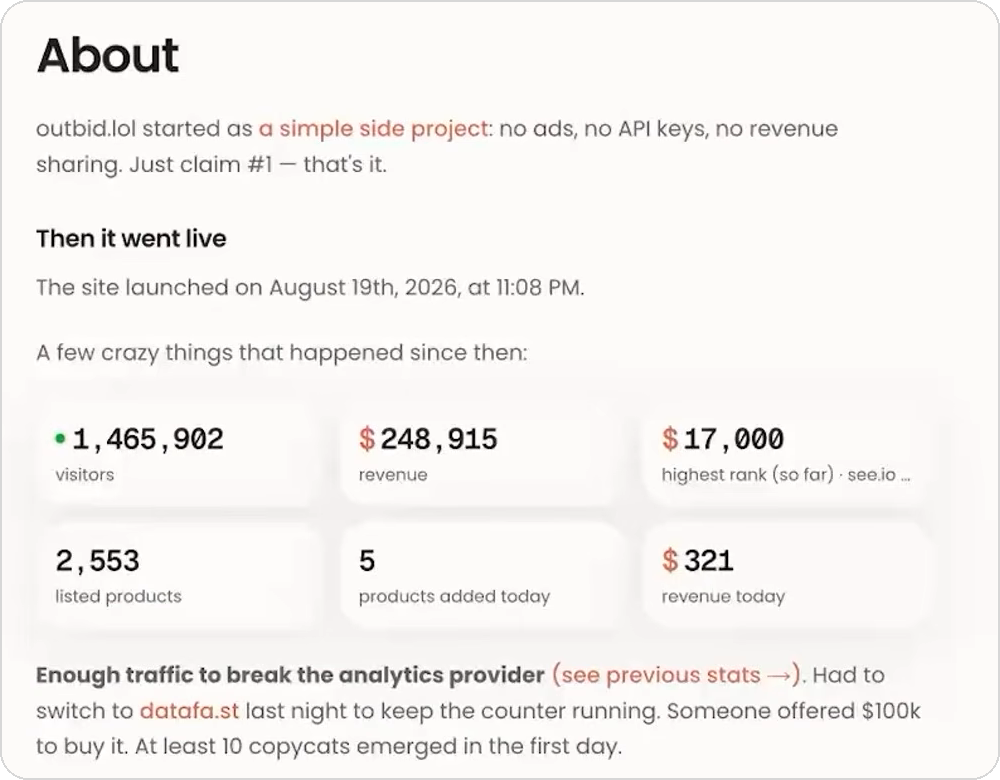
If you've been on X lately you've already seen it. outbid.lol launched on August 19th and the whole product is a bidding war. Pay more, rank higher. That's it.
It reminds me of the viral milliondollarhomepage.com that made $1,037,100 in 2005.
I think we're in a bit of a directory renaissance right now, and it's making the word "directory" more polarizing than ever. Half the people I talk to hear it and picture the Yellow Pages. The other half get that a directory is a category (like SaaS or ecommerce), and inside a category there are great bets and terrible ones.
So this week I recorded a tier list. Four types of directories I think keep working through 2027, graded on the stuff that actually matters: how hard the idea is to find, how long until money, how high the ceiling goes, and whether it'll still exist when agents do our browsing for us.
The full 24 minute version is on YouTube. Here's the compact version.
1. The novel, social first directory
This is outbid.lol's own About page, twelve days after launch.
It's the extreme case, but it's not alone.
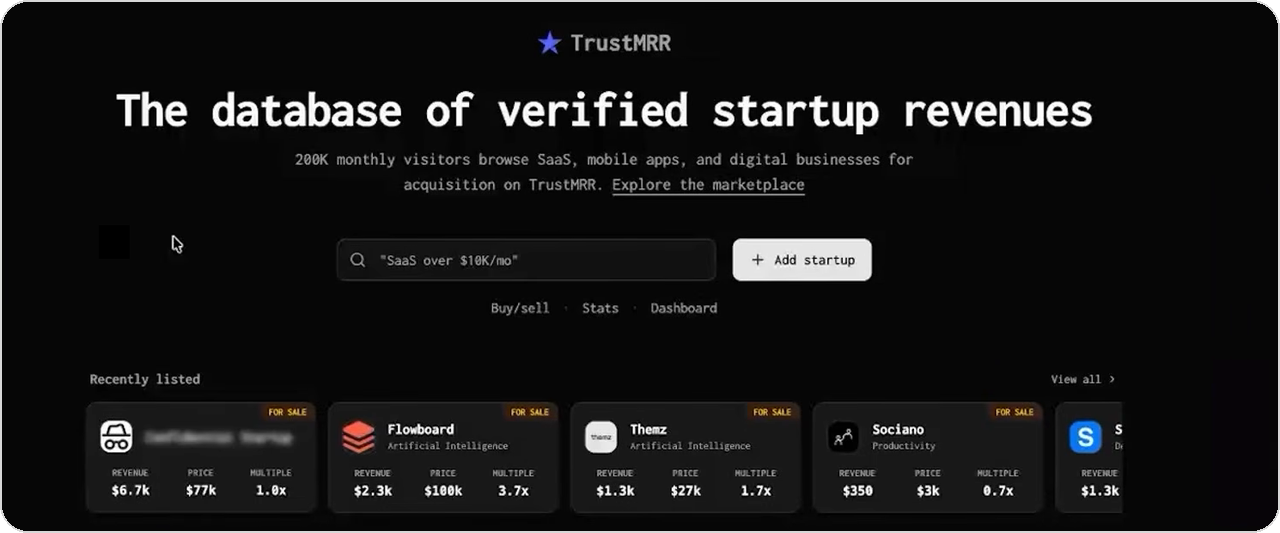
TrustMRR (Marc Lou) is a directory of founders who connected their Stripe accounts to prove their revenue. It's doing about $44K a month between sponsors and commissions on businesses that get sold through it.
And canivibecodeit.com (Rob) tells you whether a piece of software can be vibe coded and hands you the prompt. $9,000 in August.
What these have in common: a founder with an audience, an idea born from a community's frustration (everyone is sick of fake revenue screenshots), and a build that cost less than $1,000.
It's the fastest I've ever seen a directory make money. It's also the least repeatable. There are 100+ outbid.lol copycats and I haven't seen one make anything real.
Sponsors pay for eyeballs. When the hype dies, they leave (unless you do what TrustMRR did and turn the traffic into a marketplace).
Build this if: you already have an audience on X (or elsewhere), and you're plugged into a community enough to feel where the attention is going next.
2. The lead generation directory
By far the most common kind. Sam's List. The Knot. A Place for Mom. Every lawyer directory you've ever landed on. Pieter Levels just launched one for hotel pricing not too long ago.
The more boring the niche, the better. Septic tank repair. Concrete. Emergency towing. Nobody is fighting you for creativity here.
You can prompt your way to a working build in a day. The hard part is the nuance: walking someone through a decision until they trust you enough to fill out the form. Then the slow part: turning those leads into relationships with local businesses so they'll actually pay you.
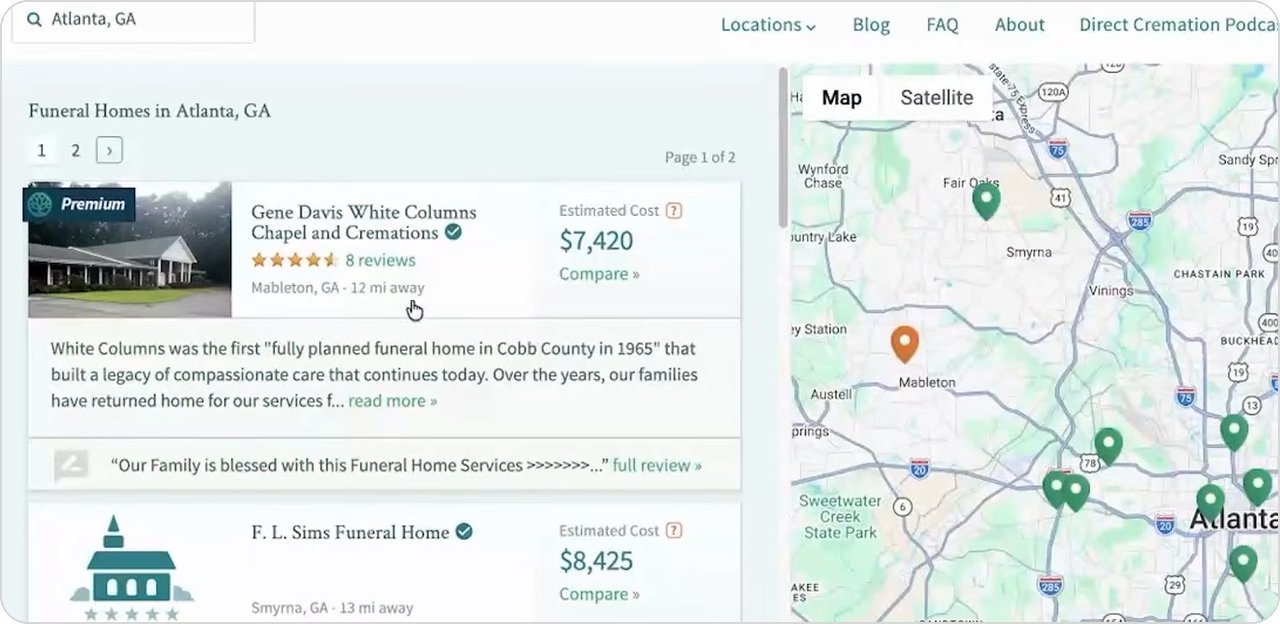
The one place the data gets hard is anything you can't scrape. parting.com called and emailed funeral homes one by one to get prices, and now every listing has a number nobody else has.
It's slow. If you're in healthcare, legal, or finance, the backlinks are brutal and expensive on top of that.
But the ceiling? There isn't one. Every seven, eight, and nine figure directory I know of and researched deeply sells leads in some capacity.
It's also the most future proof of the four. In 10 years, I believe agents are going to be booking plumbers and wedding vendors through websites built for agents. The human problems underneath don't go away.
Build this if: you're patient, can build strong topical authority (backlinks) over time, you're fine with boring, and you want the biggest possible outcome.
3. The simple utility (display ad) directory
Pick a high volume, low competition niche. Build it. Get 10K to 100K monthly visitors. Put ads on it.
Transit App, Hot Springs of America, freecampsites.net (50K+ monthly visitors for exactly what it sounds like).
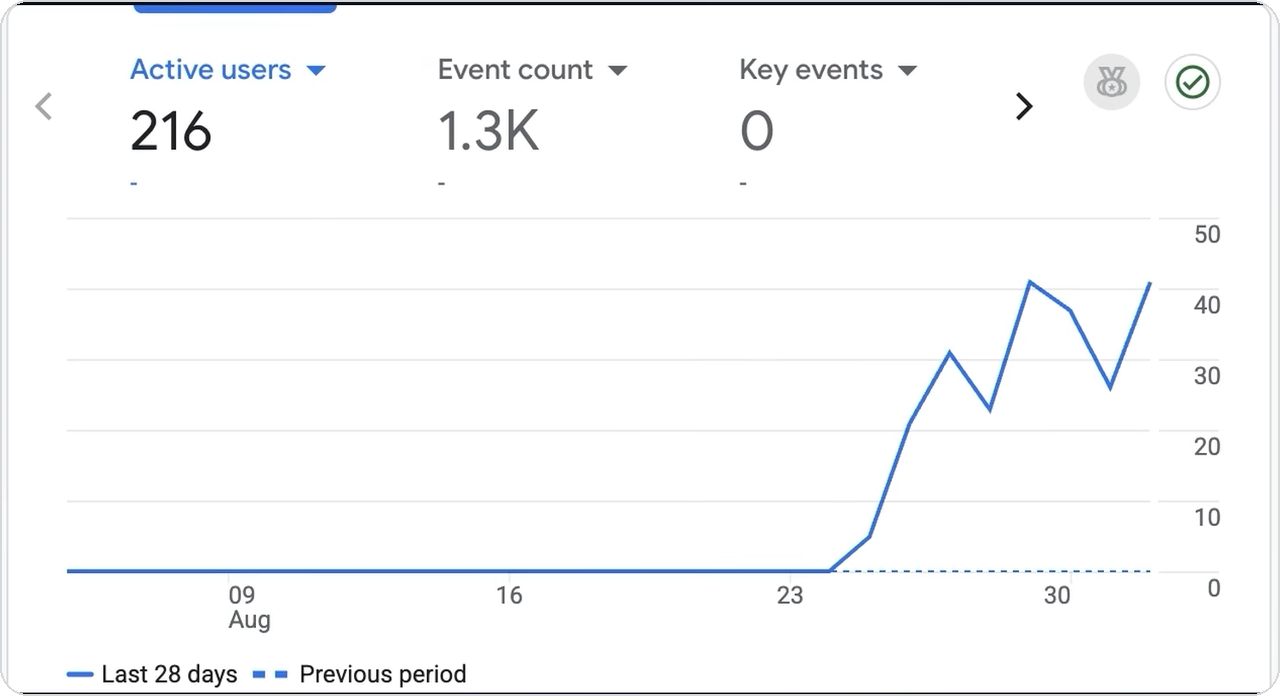
I built one of these in early August and filmed the entire build in SYD Pro. Here's what it looks like at less than a month old.
The first organic visitors showed up within 48 hours of launch, and it's pacing for 1,200 to 2,000 monthly visitors. So yes, the untapped niches still exist.
Here's the catch. For me, finding the idea is 80% of the work. The obvious ones (free campsites) are owned by giant sites, so you end up scouring dozens of ideas to find one that's open.
The other catch is the ceiling. You get paid on traffic, and 10K to 50K visitors is somewhere between $200 and $2,000 a month. So many variables from user signals, niche vertical and where you traffic comes from makes this hard to pinpoint. Which is why a lot of people build five of these instead of one.
Most repeatable of the four by a mile. If one works, the adjacent niches usually work too.
Build this if: you're new. This is still where I'd tell anyone to start. Small bet, real traffic, real reps.
4. The hyper niche community directory
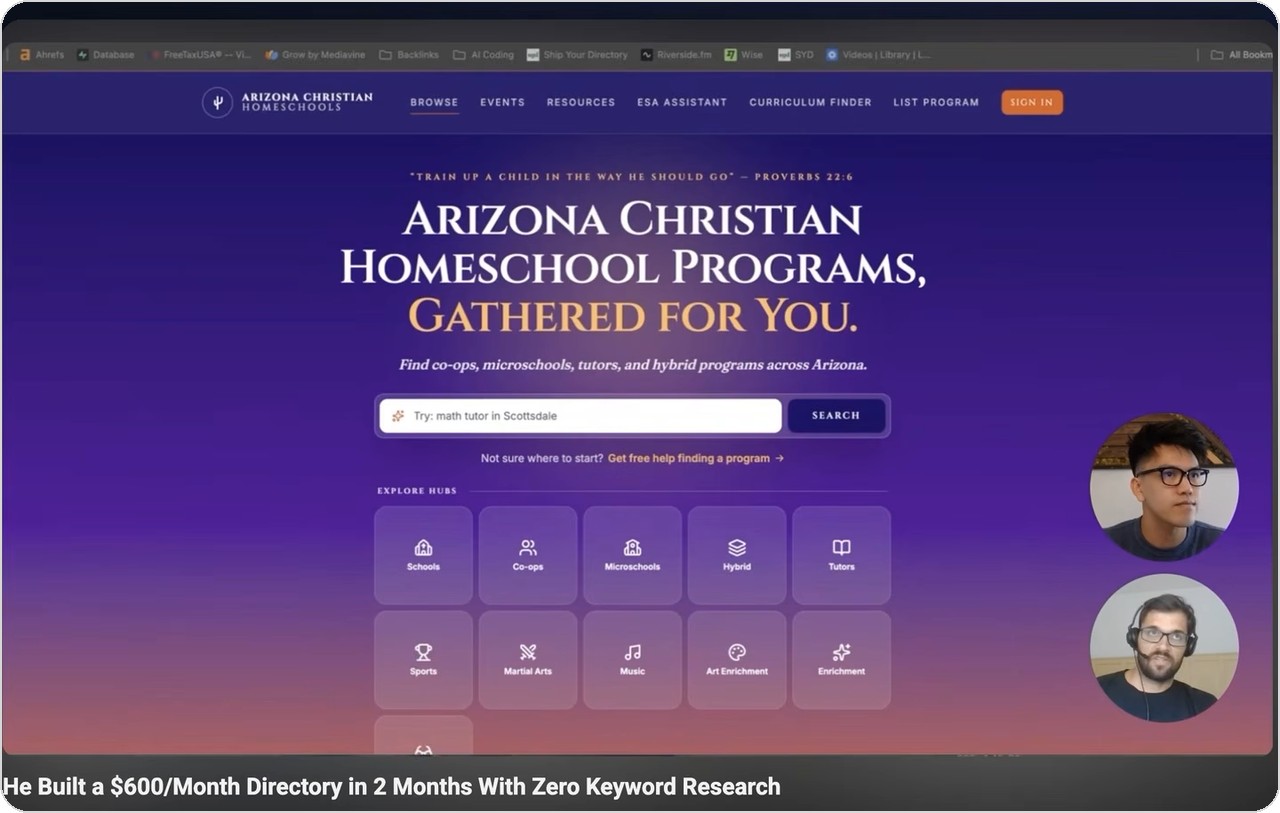
Grant built an Arizona Christian homeschool directory (we talked about it on the podcast), and he flipped the whole process.
I usually start in Ahrefs and pick an idea from the numbers. Grant started in Facebook groups. Social listening instead of keyword research. He watched what people kept asking for, built exactly that, and got his listings from the community self submitting.
No SEO required. No posting on social required. Just living in a community you genuinely care about and building the thing they've been waving money at.
And it can be fast. A few years ago, I joined an entrepreneurs group that I discovered through a Facebook group and started talking about SEO consulting. I had paying my first SEO clients within a few weeks. Different product, same mechanism.
The catch is that trust is your only distribution channel (unless you stack SEO or organic social on top). Blow it and you have nothing. People can sniff bot energy from a mile away, which is also why this one is the hardest to repeat.
Build this if: you're already deep in a community, and you'd rather talk to people, build authentic online relationships and avoid SEO or posting on social media as your channel(s) of growth.
Which one fits you?
Honestly, it usually comes down to four questions. Answer them in order and stop at the first yes.
- Do you have an audience? A few thousand real followers on X changes everything. Yes? Go novel.
- Are you already deep in a community? A Facebook group or subreddit you'd be in anyway. Yes? Go hyper niche.
- Can you go 6 to 12 months before any money, in a boring niche? Yes? Go lead gen.
- None of the above? Build a display ad directory. Then build another one.
Most people land on the last one, and that's completely fine. That's where I started and it's where I still play.
Most people never finish (the whole opportunity)
Ideas are going to get harder to find as more people build directories. I'm not going to pretend otherwise.
But most people don't finish. And of the ones who do, most never do the boring part after: build a few backlinks, fix the on page SEO stuff, make the site a little better every month.
So the real opportunity isn't any of the four types. It's being the person who actually ships it and keeps going.
Keep building,
Frey